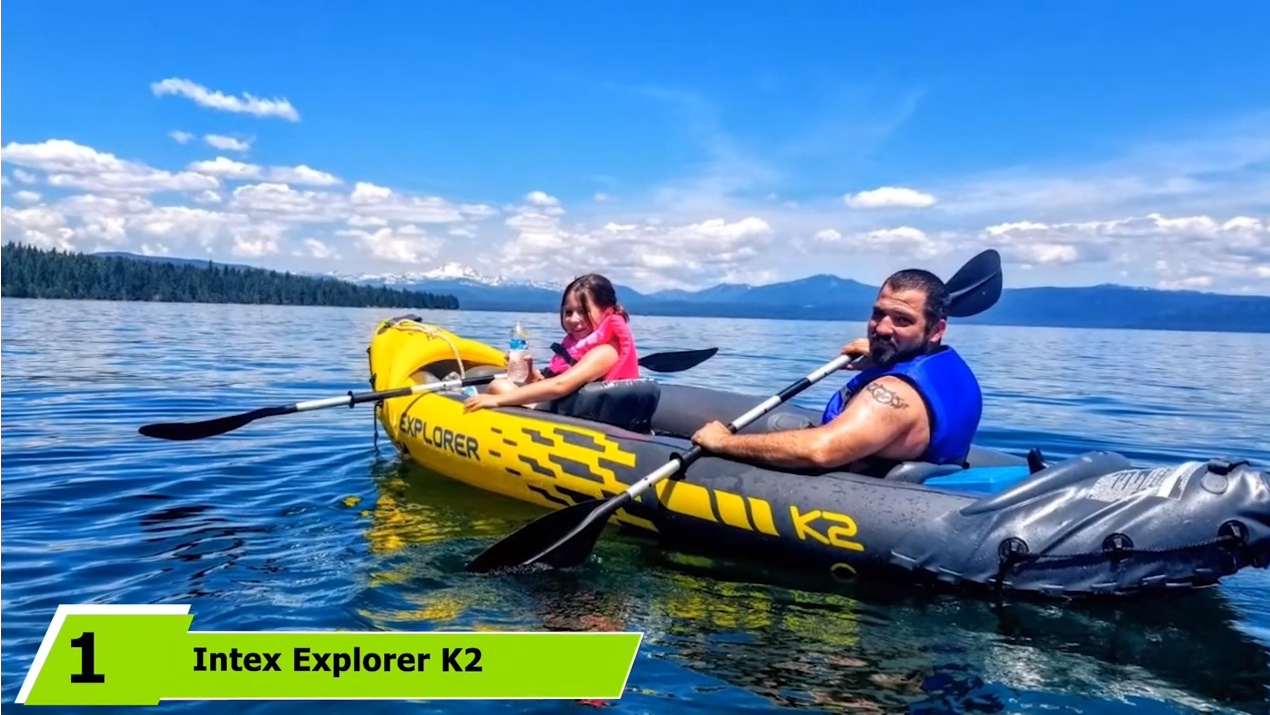

We recommend paddling with an upright seat, a relaxed grip, and torso-powered strokes that start near your feet and finish at your hips to save energy. To paddle a kayak efficiently, place each blade cleanly in the water and move your body through a comfortable range of motion.
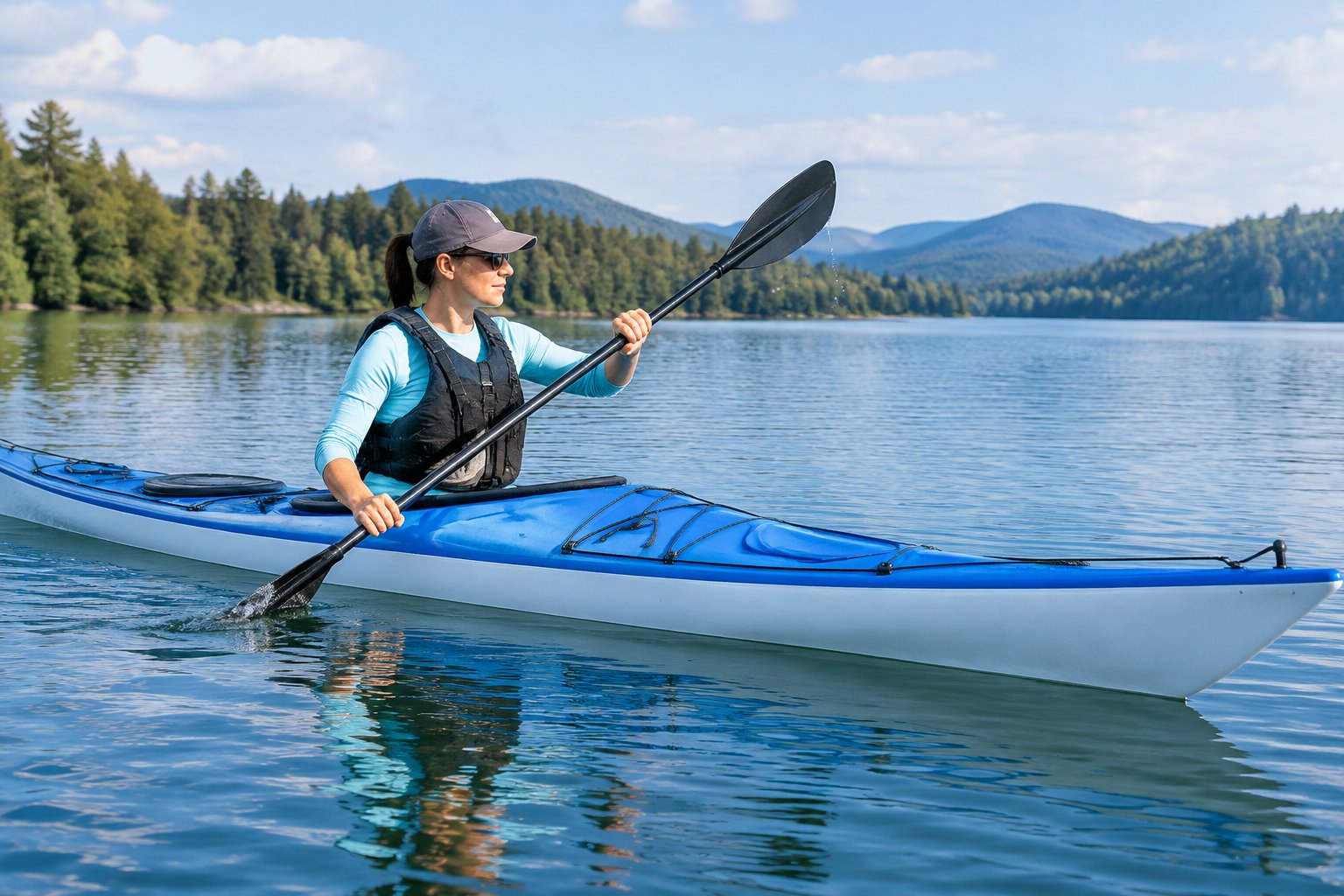
Every extra course correction takes effort. Efficient paddling combines steady forward movement with controlled turns and stops, so you spend less time fighting the boat. Practice slowly enough to feel how each stroke changes your direction before adding speed.
Choose Safe Practice Water and Check Your Gear
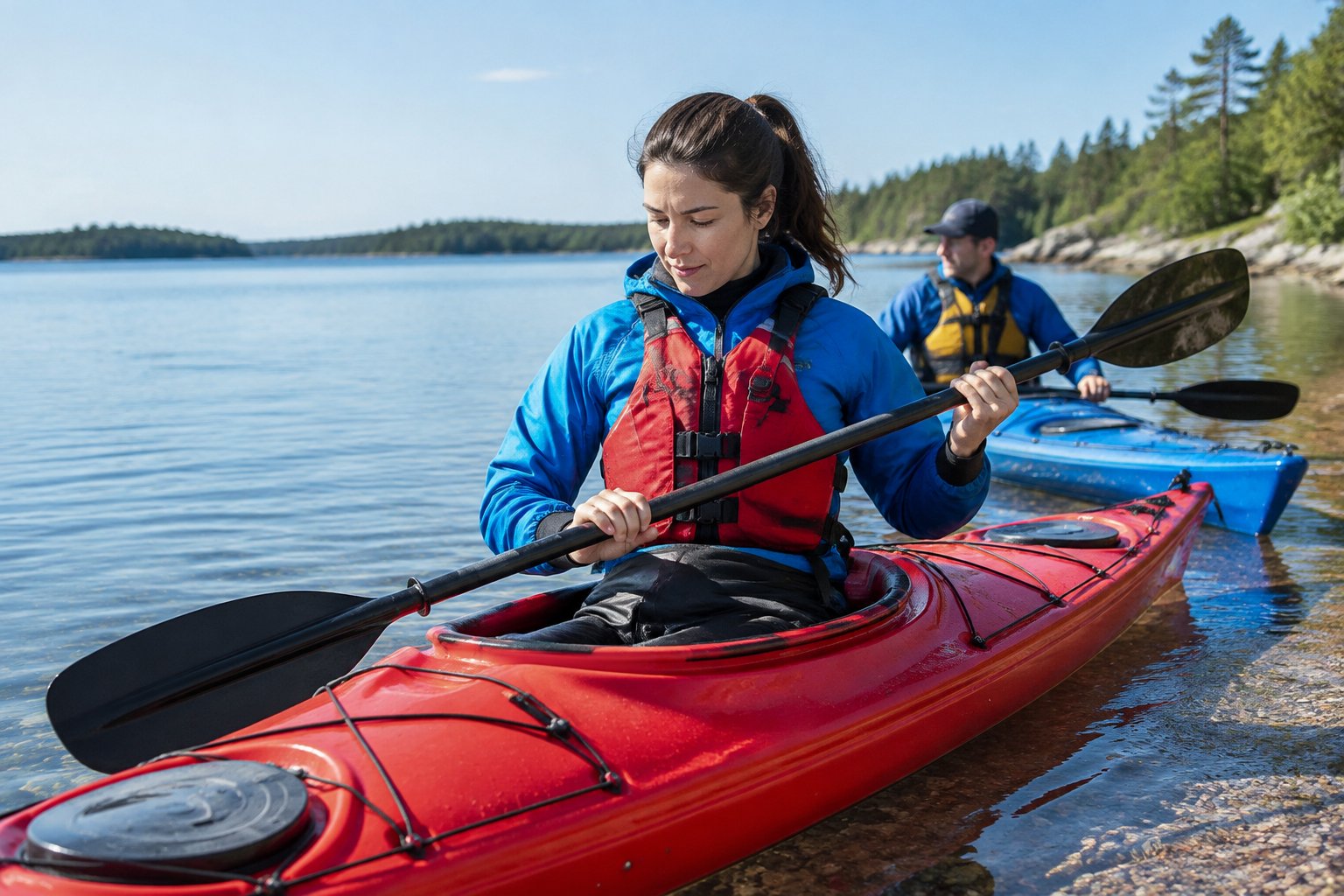
Learn on sheltered, calm water with an easy landing nearby. Choose a place away from boat traffic, strong currents, and offshore winds. Practice with a capable partner or instructor.
Before launching, complete a kayak equipment inspection. Check the hull for damage, secure the seat and footrests, and make sure your paddle’s shaft connection locks firmly.
Make these kayak safety checks part of your routine:
- Wear a properly fitted, U.S. Coast Guard-approved personal flotation device (PFD).
- Check the weather and wind forecast.
- Dress for the water temperature, including suitable immersion protection in cold water.
- Carry an accessible whistle and waterproof communication.
- Tell someone where you are going and when you expect to return.
Before paddling away from shore, learn how to recover if your kayak flips. If you use a spray skirt, practice releasing it and exiting the cockpit under qualified supervision.
Sit Upright and Adjust Your Footrests
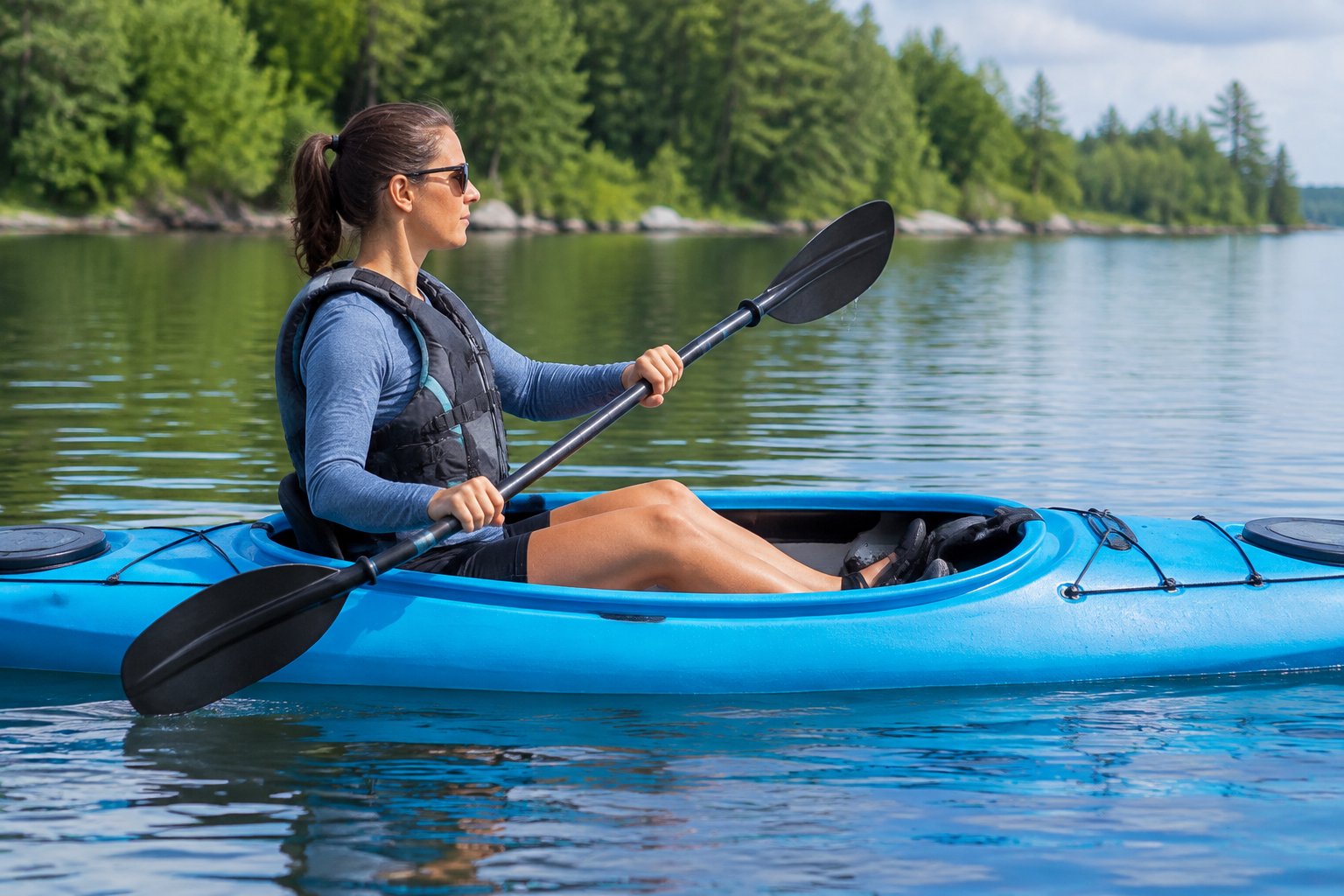
An upright, supported position gives you room to rotate and keeps your lower body connected to the kayak. Make your first adjustments on shore, with the boat safely supported.
- Settle into the seat. Keep your pelvis upright and your shoulders relaxed.
- Set the back support. Adjust it to support your lower back while leaving your upper body free to turn.
- Position your feet. Rest the balls of your feet against the footrests, keeping a comfortable bend in your knees.
- Check your leg clearance. In a sit-inside kayak, your legs should have room to move and exit freely.
Test the setup by gently rotating your chest in both directions. Your feet should stay connected without forcing your knees into a cramped position.
Check your life vest’s fit while seated as well. It should stay secure and allow a full paddle motion without pressing into your chin.
Hold Your Paddle Correctly and Relax Your Grip
A centered paddle grip and straight wrists help you transfer power without overworking your hands. Start with an unfeathered paddle, with both blades lined up, while you learn the basic movements.
Hold the shaft above your head and adjust your hands until your elbows form roughly right angles. Lower the paddle in front of you, keeping equal shaft length on either side.
For a typical curved, asymmetrical recreational paddle:
- Keep the longer blade edge on top.
- Face the scooped side toward you when holding the paddle in front of your chest.
- Line your large knuckles up with the upper blade edges.
- Keep your wrists in line with your forearms.
Wrap your thumb and index finger around the shaft, then rest your remaining fingers lightly on it. Use enough pressure to control the paddle securely. If your forearms tighten during easy paddling, ease your grip and lower your shoulders.
Master the Forward Stroke: Catch, Power, and Release
The kayak forward stroke starts with a clean blade placement, followed by torso rotation and an early exit. Your core muscles and back provide power, while your arms guide the paddle and connect it to your body.
- Catch near your feet. Turn your chest so the shoulder on the working side moves forward. Place the blade fully in the water before applying pressure, keeping your weight centered.
- Power through rotation. Unwind your torso as the kayak moves forward. Let your upper hand press the shaft forward while your lower hand guides the working blade alongside the boat.
- Release at your hip. Slice the blade out when it reaches your hip, then prepare the opposite blade for its catch.
Keep your elbows comfortably bent and low. Gentle pressure through the footrest on the working side helps connect your body to the boat.
For practice, make several easy strokes while focusing only on full blade placement. Then focus on the exit point. These paddling techniques become easier to coordinate when you work on one detail at a time.
A loud splash at entry is a useful cue to slow down and set the blade before pulling.
Keep Your Kayak Moving in a Straight Line
Balanced strokes and small, early corrections help you paddle straight. Look toward a fixed landmark ahead while keeping nearby traffic and obstacles in view.
Match the blade path on both sides. If your right blade travels close to the hull while your left blade swings outward, the wider stroke adds a turning force.
Use this practice sequence:
- Point the bow toward a clear landmark.
- Paddle at an easy pace with equal effort on each side.
- Notice the first sign that the bow is drifting.
- Add a small correction, then allow time for the kayak to respond.
Check your hand position if the boat repeatedly turns in the same direction. Unequal shaft length changes the leverage on each side.
As you refine how you paddle a kayak, separate technique problems from changing conditions. Wind and current also affect your course. For a calm-water drill, raise a retractable rudder or skeg only when conditions are safe and you remain comfortable controlling the boat.
Use the Reverse Stroke to Stop and Back Up
The reverse stroke slows a moving kayak and moves a stopped kayak backward. Learn to brake at low speed with plenty of open water ahead.
- Rotate your torso and place the blade beside your hip.
- Use the back face of the blade to press water toward the bow.
- Unwind your torso as the blade moves toward your feet.
- Lift the blade out and repeat on the opposite side.
Alternate sides to keep the bow from swinging sharply. Begin with light pressure, then increase it as you become comfortable with the boat’s response.
When backing up, check behind you before starting and keep looking over your shoulders during the movement. Turn your torso with your arms so your hands stay in front of your chest.
Stopping belongs among your essential kayaking basic skills. Practice braking well before approaching a dock or another paddler.
Turn and Correct Your Course With a Sweep Stroke
A forward sweep stroke turns your kayak away from the side where you paddle. To turn left, sweep on the right; to turn right, sweep on the left.
Start with a broad, gentle arc:
- Rotate forward and place the blade near your feet.
- Keep the shaft relatively low and the blade submerged.
- Sweep outward in a wide arc, using your torso to follow the movement.
- Slice the blade out as it approaches the rear of the kayak.
Rotate your chest throughout the stroke to keep your hands in front of your upper body. Stop the sweep within a comfortable range, before your shoulder feels stretched.
For a small course correction, use a shorter sweep and resume forward paddling. For a larger turn, repeat the stroke and watch the bow’s response between attempts.
Keep the kayak level during early practice. Adding a deliberate lean introduces a separate balance skill that deserves instruction.
Move Sideways With a Draw Stroke
The draw stroke moves your kayak sideways toward the working blade. Practice from a stop before using it beside a dock or another boat.
- Turn your chest toward the direction you want to move.
- Reach comfortably out to the side, roughly opposite your hip.
- Place the blade in the water with its power face toward the kayak and the shaft fairly upright.
- Draw the blade toward your hip, stopping well clear of the hull.
- Turn the blade edge-on and slice it away from the kayak to reset.
Keep your head over the boat and your upper hand relaxed. Reach only as far as your balance comfortably allows.
If the bow moves sideways faster than the stern, shift the blade placement slightly toward the rear on the next attempt. Use small changes to find the position that moves the whole kayak sideways.
If the blade catches against the hull, release pressure and reset. Prying against the boat risks a capsize.
Reduce Fatigue and Build a Sustainable Paddling Rhythm
Choose a steady pace that lets you breathe comfortably and maintain the same stroke quality throughout your outing. Rushed strokes encourage shallow blade placement and repeated corrections.
Watch for these signs of tiring technique:
- Burning forearms: Relax your grip and check wrist alignment.
- Shrugged shoulders: Lower your elbows and reduce effort.
- Long pulls behind your hips: Shorten the power phase.
- A stiff upper body: Slow down and restore comfortable torso rotation.
Arm paddling puts a heavy workload on smaller muscle groups. Let your chest turn with each stroke while your arms keep a soft bend.
Take breaks while you still have energy for the return trip. Drink water regularly and choose a route that suits the conditions and your ability.
If you paddle with a partner in the same boat, tandem kayak technique also requires a shared rhythm. The rear paddler should match the front paddler’s cadence so the blades stay clear of each other.
Frequently Asked Questions
Is kayaking hard for beginners?
Calm-water kayaking is approachable for beginners with suitable equipment and instruction. Boat control takes practice, so choose a sheltered location and learn to stop before extending your route.
Which core muscles does kayak paddling use?
Kayak paddling uses your abdominal muscles and obliques to support and rotate your torso. Keep the movement comfortable, with your back muscles contributing and your feet supported against the footrests.
How do you choose the right paddle length?
Choose paddle length to suit your height, kayak width, and paddling style. Have an outfitter check the fit, especially if reaching the water forces you to lean sideways or raise your shoulders.
What should you do if paddling causes shoulder pain?
Stop the painful movement and reach a safe landing, with help if needed. Seek medical advice for persistent or sudden pain. Before resuming demanding paddling, have a qualified instructor assess your technique.