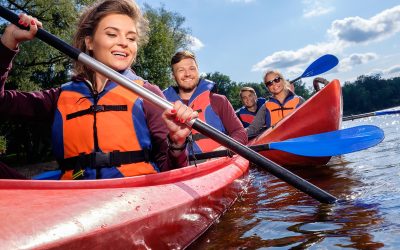

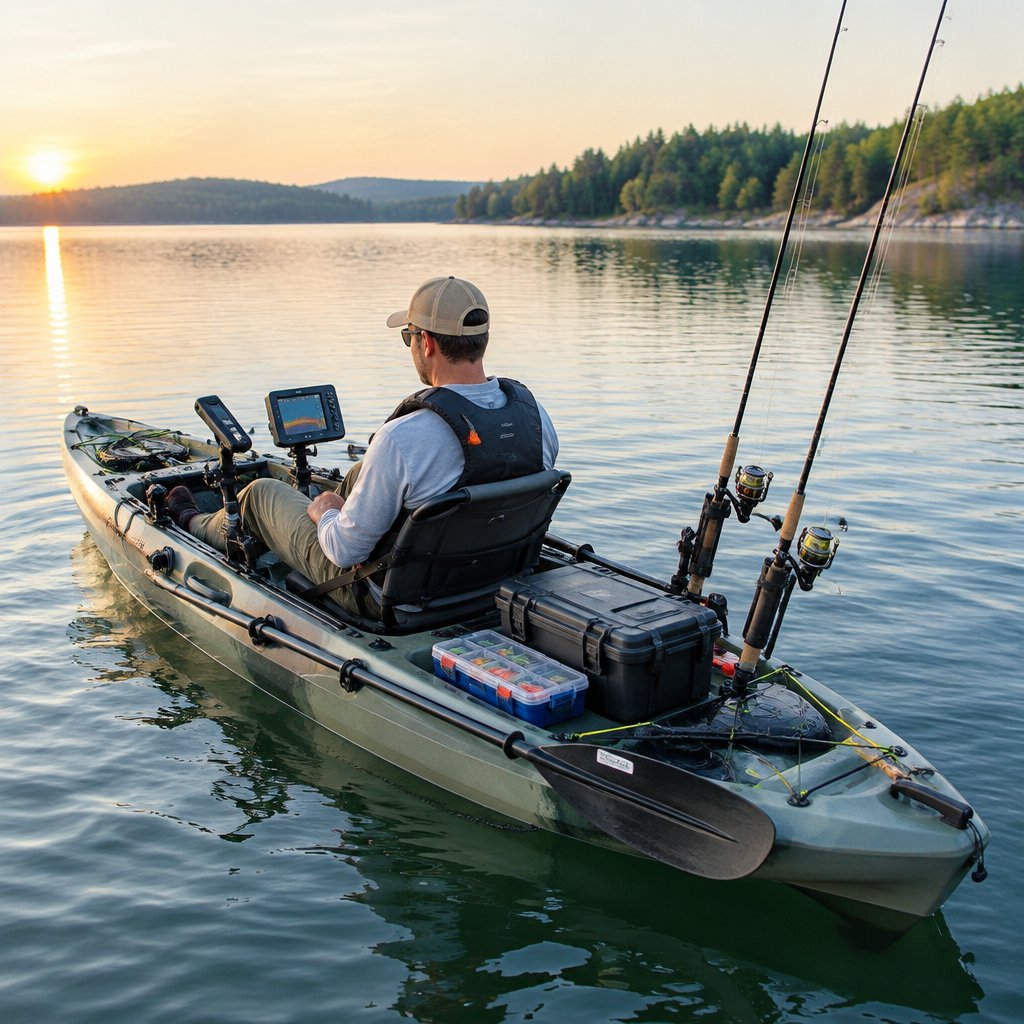
To choose the best kayak fishing accessories, start with a properly fitted PFD and paddle, then add gear that fits your kayak and solves a problem you encounter on the water. If you fish from a high-back seat, the Stohlquist Fisherman Personal Flotation Device is a useful starting option because its raised back flotation helps clear that seat.
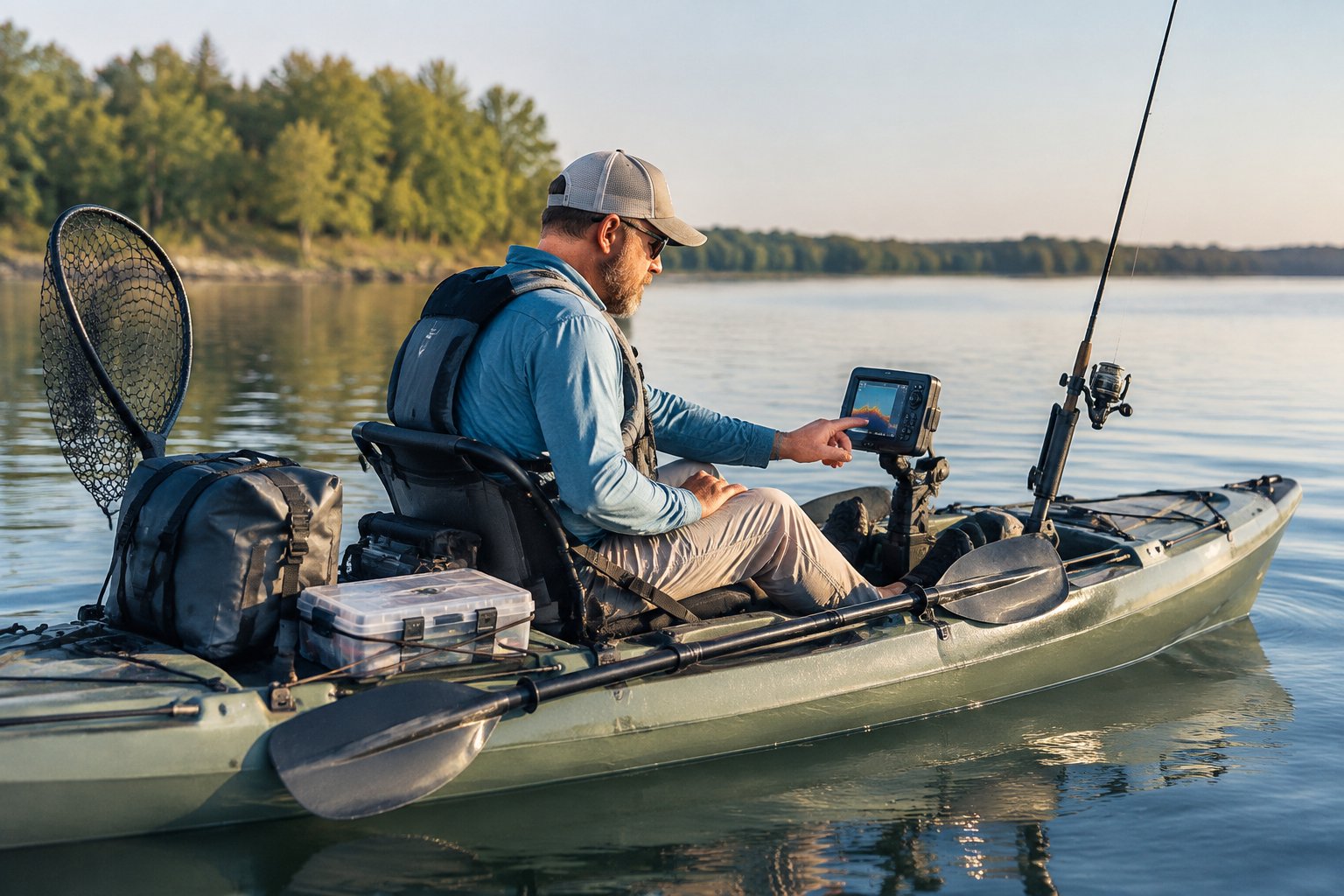
You get more useful space for kayak fishing when every attachment has a clear job. Before adding fishing kayak accessories, account for their weight, mounting hardware, and reach from your seated position. Your budget also needs to cover installation parts, especially when you add electronics or propulsion.
What Safety Gear and Fit Checks Come First for Kayak Fishing Accessories?
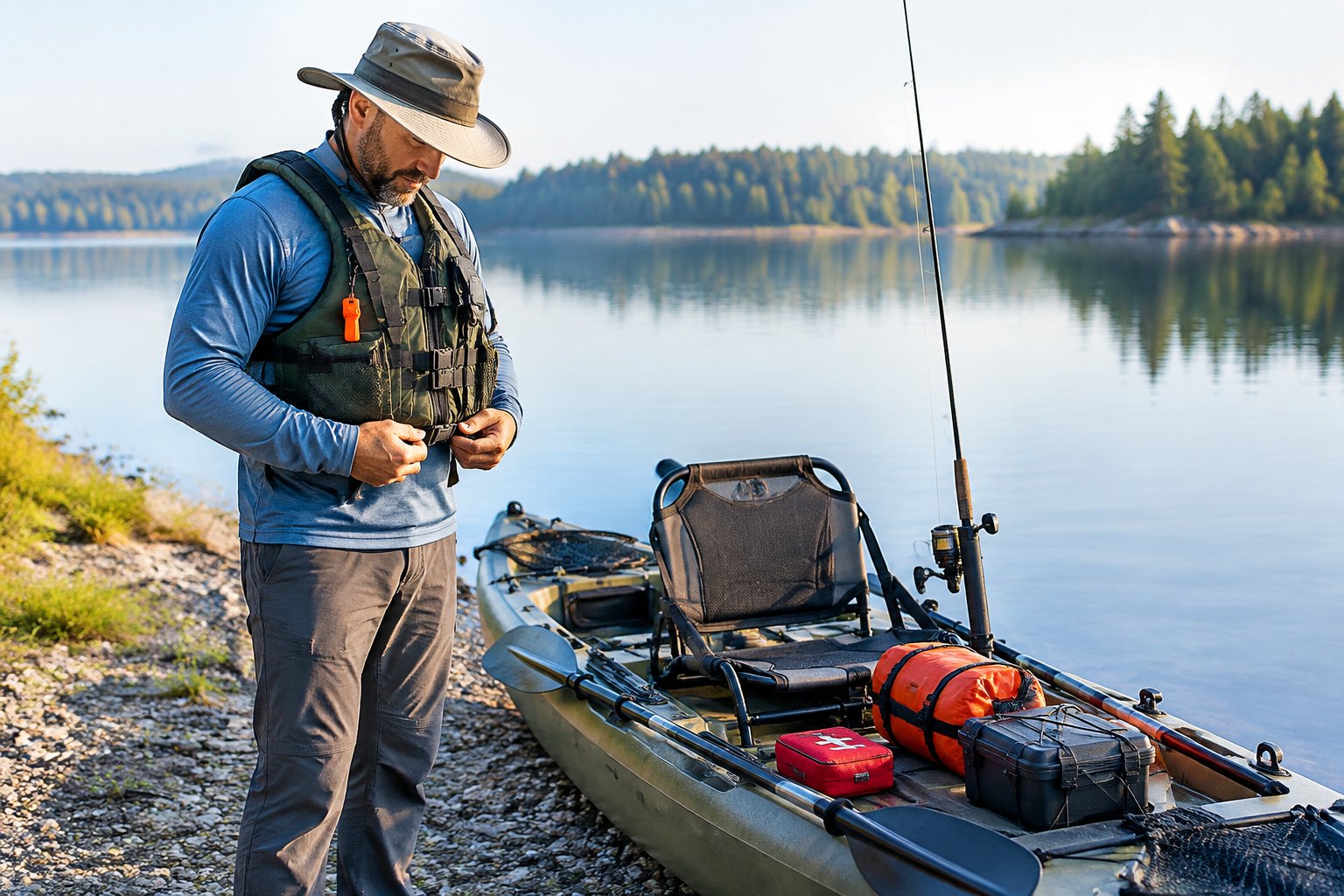
Your first priorities are a wearable PFD, accessible signaling gear, and a fishing kayak loaded within its manufacturer’s limits.
Choose a personal flotation device (PFD) with a U.S. Coast Guard approval label suited to your activity and body size. You should wear it throughout your outing; the Coast Guard recommends always wearing a PFD while on the water.
Check your life vest fit while seated in your kayak. Tighten the straps, rotate through a paddle stroke, and reach forward. Your vest should stay secure without pressing into your chin or blocking movement.
With the Stohlquist Fisherman Personal Flotation Device, you get high-back flotation and front tool pockets with fold-down work surfaces. Judge its fit against your own seat before choosing it.
For your initial kayak fishing setup:
- Attach a whistle where you can reach it while swimming.
- Carry communication equipment suited to your location.
- Dress for the water temperature and practice reentry in controlled conditions.
- Include your body weight, gear, drinking water, and batteries in your load calculation.
- Keep rescue access and your exit path clear.
When choosing kayak fishing accessories for beginners, include essential kayak safety equipment before extra fishing attachments. Match lighting and distress equipment to your operating area and check applicable state rules.
Choosing Paddles, Rod Holders, and Anchoring Gear
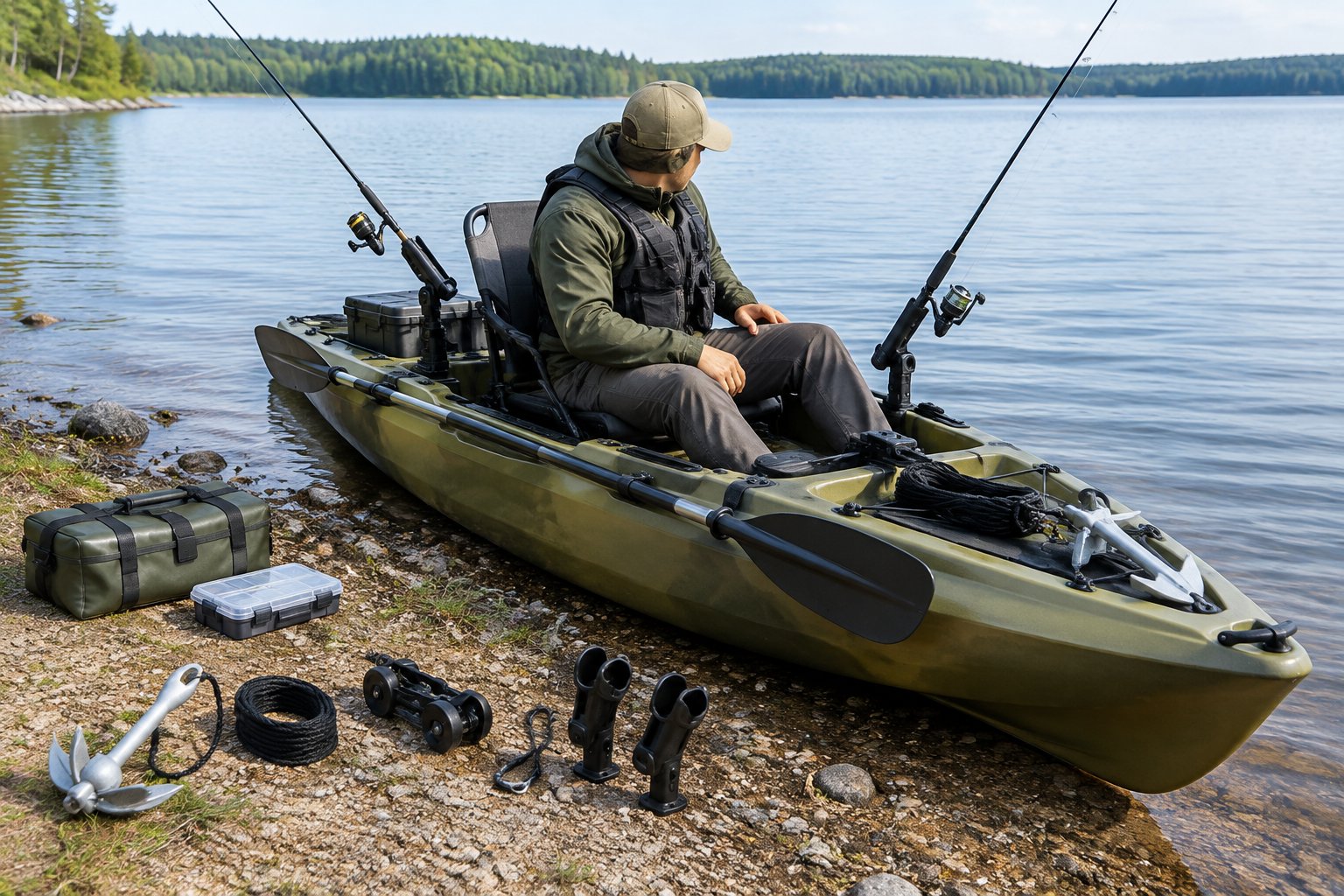
Choose your kayak paddle for seated reach, position rod holders outside your stroke, and reserve anchoring gear for suitable water.
When comparing kayak paddles, account for hull width and seat height. With the Bending Branches Angler Classic Paddle, you get a fiberglass shaft and a listed weight of 35.5 oz..
Use a kayak paddle holder to park your paddle while fishing. A paddle leash adds retention but creates entanglement risk. The OCEANBROAD Kayak Paddle Leash has a listed length of 5–8 ft.. Keep any kayak paddle leash clear of your body; avoid loose tethers in moving water or surf.
Fit fishing rod holders using your own kayak fishing rod. Check reel clearance and practice removal while seated. Among adjustable rod holders:
- With the YakAttack Omega Pro Rod Holder, you get an extension arm for reel height and longer rod butts.
- With PLUSINNO 2-in-1 Fishing Rod Holders, you get track- and deck-mount compatibility.
Select a kayak anchor for bottom type and conditions. Compare kayak anchors with their anchor line and release hardware included. A kayak anchor trolley moves the attachment point toward the bow or stern. Your anchor trolley system needs an accessible quick release; an anchor trolley offers no protection against dangerous current. Avoid anchoring in rapids, strong tidal flow, or snag-filled channels.
Which Storage, Comfort, and Transport Accessories Fit Your Kayak?
Choose storage that stays reachable, comfort upgrades that preserve stability, and transport equipment matched to your loaded hull.
Keep your kayak fishing gear low and secure. Before adding a kayak fishing crate, measure the tank well and check whether you can reach its contents without twisting far behind your seat.
Use these fit checks:
- Waterproof dry bag: Choose a closure and immersion rating suited to its contents. Secure it to the kayak and keep emergency items accessible.
- Tackle boxes: Carry the lures and terminal tackle needed for your outing. Check that lids open fully beneath nearby mounts.
- Floating fishing net: Match hoop size to your target fish and handle length to your seated reach. Keep the handle outside your paddle stroke.
- Fillet knife: Keep the blade sheathed and secure. Handle fish cleaning ashore where you have a stable work surface.
- Kayak seat: Check approved mounting points. Raising your seat changes your center of gravity and paddle reach.
- Kayak cooler: Include ice and contents in your load calculation. If you are considering a Yakhacker Kayak Cooler, measure its intended location and preserve hatch access.
Compare kayak carts by hull support, loaded weight, and launch terrain. With the RAILBLAZA C-Tug Kayak Cart, you get a 260 lbs static loading rating, with capacity varying under dynamic loads on different terrain. Leave room below that limit for rough ground, and strap your kayak securely to the cart.
When Are Fish Finders and Motors Worth the Upgrade?
Add a fish finder when depth and underwater structure affect your fishing decisions; consider a motor when repeated travel or positioning needs justify its added load.
You gain more from fish finders when you know how you will use the display. For offshore structure or deeper water, a kayak fish finder helps you identify depth changes and return to marked locations. For shallow, visible cover, you might give storage or comfort a higher budget priority.
With the Garmin STRIKER 4, you get a unit listed at $159.99 USD with a dual-beam transducer. Your installed cost also includes the fish finder mount, fish finder battery, and any required transducer hardware. When choosing your kayak fish finder, account for the full installation.
Secure the battery against movement and protect its terminals. Use the specified voltage, marine-suitable connections, and an appropriately sized fuse near the positive battery terminal. Route cables away from foot controls and protect them wherever they pass through the hull.
A kayak trolling motor adds propulsion equipment and a larger electrical system. Confirm that your kayak supports the mounting method and total load. Keep steering and emergency shutoff controls reachable, and retain a paddle.
Before operating under motor power, address registration requirements with your state boating agency. Motorized operation also adds obligations beyond your paddle-only setup.
Build Your Setup Around Safety, Fit, and Actual Need
Build your setup in stages, starting with safety equipment and dependable paddle control.
Next, add secure rod storage and enough tackle organization for your usual trips. Evaluate comfort and transport needs before committing space to electronics or a motor.
Your best fishing kayak accessories should earn their place through repeated use. Include mounts and hardware in each cost decision, then perform a kayak equipment inspection after installation. Before adding another attachment, check that your existing kayak fishing accessories leave your stroke and reentry path clear.
Frequently Asked Questions
You can resolve most remaining accessory choices by checking installation details and how your gear behaves when wet.
Should You Drill Into Your Kayak to Install Kayak Fishing Accessories?
Use existing tracks or manufacturer-approved mounting points when they provide a secure fit. If drilling is required, follow your kayak manufacturer’s guidance on location, backing hardware, and sealing, while preserving access for inspection.
How do you choose corrosion-resistant fishing kayak accessories?
Look for hardware and materials intended for marine exposure, with accessible joints that you can rinse and inspect. After saltwater use, rinse compatible gear with fresh water and dry electrical connectors before storage.
What should you remove before transporting your kayak?
Remove loose tackle and detachable items that could shift or catch wind, including your fish finder display when its mounting system permits. Secure remaining equipment and use vehicle restraints designed for the kayak itself.
How should you check a newly rigged kayak?
Test your loaded setup in sheltered water close to a safe landing. Practice paddling, reaching your gear, and exiting before taking the new arrangement into more demanding conditions.