
For short outings on sheltered lakes and gentle rivers, choose a recreational kayak with a comfortable seat and a hull you feel steady paddling; for longer trips, start with a day-touring design that gives you better cruising efficiency and gear storage. Match your water and activity first, then check your fit, transport limits, and total budget.

Choosing the right kayak means looking beyond how comfortable you feel sitting in a showroom. You also need enough room for your loaded gear, a manageable carry to the launch, and a workable rescue plan after a capsize.
Before you buy, arrange a rental or supervised demo on water similar to your usual outings. Bring your paddling footwear and life jacket so you can judge the fit properly.
Which Kayak Types Match Your Water and Activities?

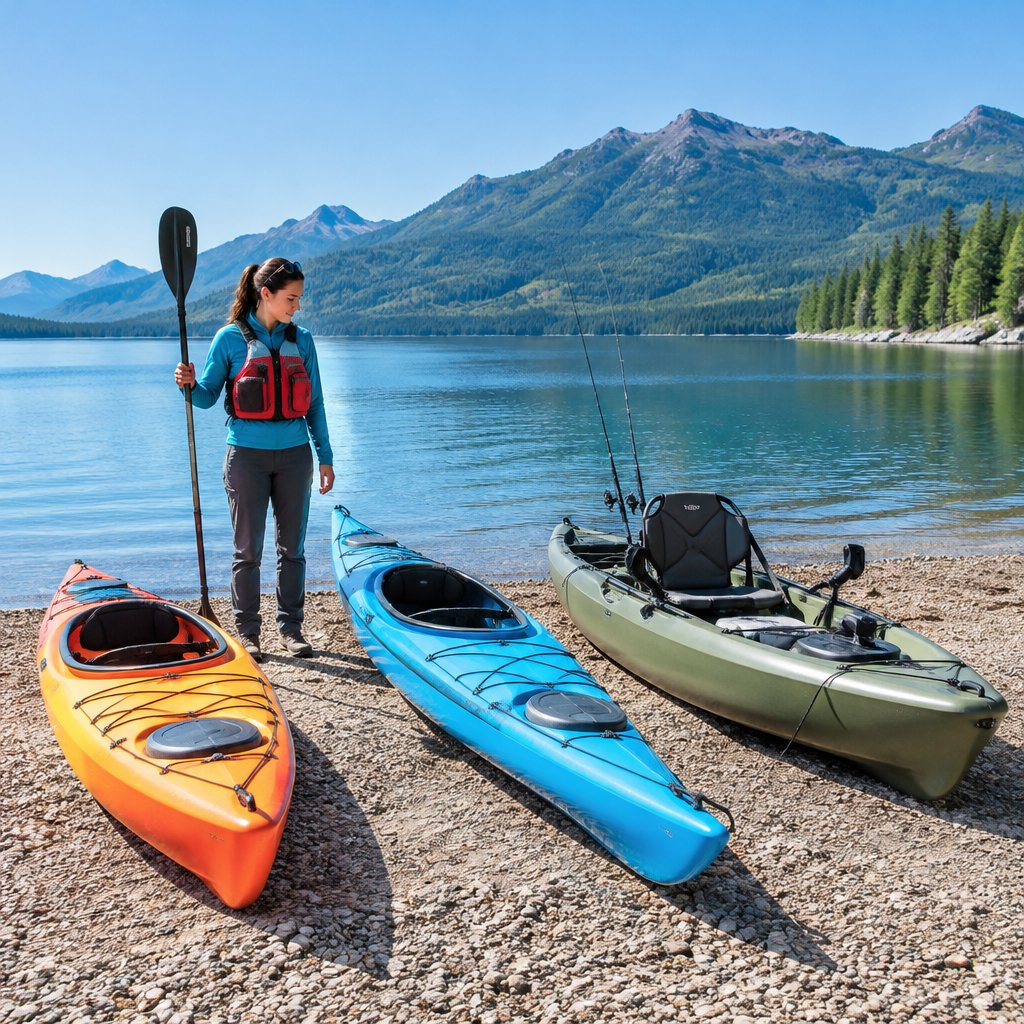
Choose your kayak’s intended use first, then select its cockpit layout and propulsion. When comparing different types of kayaks, you’ll encounter overlapping labels: a fishing kayak might also be a sit-on-top kayak with pedals.
- Recreational kayaks: Start here for relaxed trips on sheltered water. You get easy handling and a roomy layout, with less cruising efficiency than a touring design.
- Touring kayaks: Choose a day-touring kayak for longer outings and added storage. For exposed coastal routes, look for a sea kayak with secure flotation compartments, deck lines, and a design suited to rescues. An “ocean kayak” label alone gives you little detail about suitability.
- Whitewater kayaks: Choose a purpose-built whitewater kayak for rapids, with instruction and river-specific safety gear. Your short, maneuverable hull serves a different purpose from a distance-focused racing kayak.
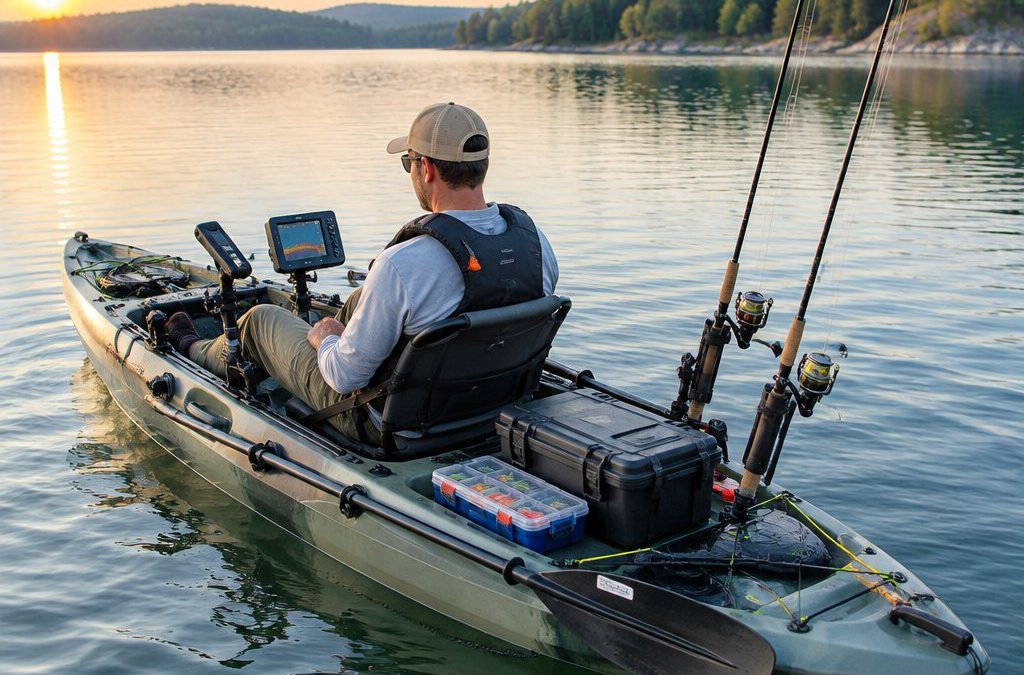
- Fishing kayaks: Compare kayaks for fishing by usable deck space, rod access, and loaded handling. Your elevated seat improves visibility but changes how the boat feels when you lean.
With sit-on-top kayaks, you get an open seating area and scupper holes that drain deck water. With sit-inside kayaks, also called sit-in kayaks, you get a sheltered cockpit and closer contact with the hull.
Choose a single kayak or solo kayak for independent outings. Before buying a tandem kayak, practice coordinated strokes and lifting together.
A paddle kayak keeps your propulsion setup simple. A pedal kayak frees your hands for fishing but adds drive weight and underwater clearance needs; your pedals power fins or a propeller, without a motor.
What Size, Fit, and Features Do You Need?
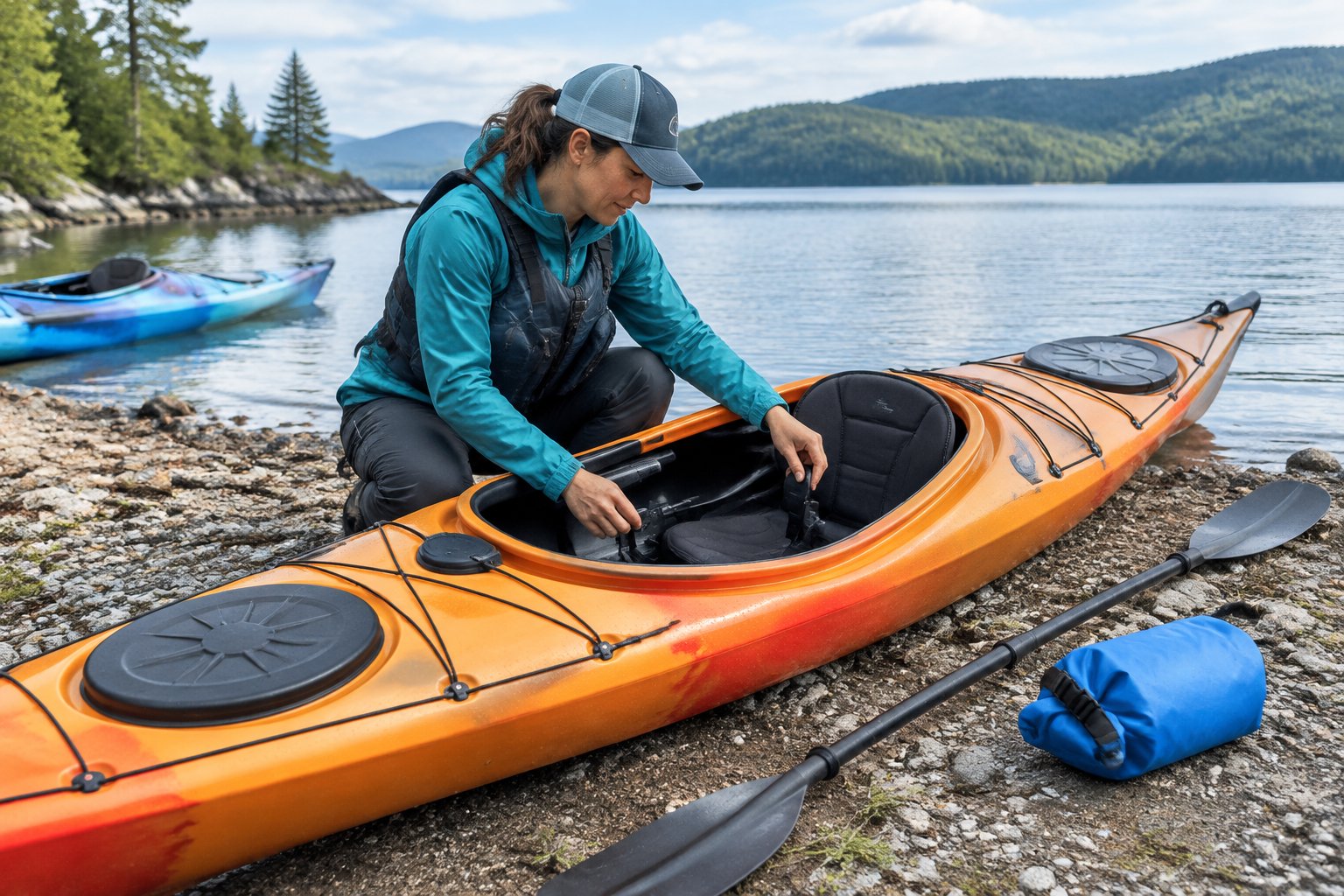
Choose enough capacity for your full load, then judge fit and handling during a test paddle. Your kayak specifications should support your body size and intended gear load.
Add your weight in paddling clothing to your equipment, drinking water, and any passenger or pet. Follow the manufacturer’s definition of capacity and leave room below the stated maximum. A boat loaded to its limit sits lower and responds differently from an empty demo boat.
Use these checks to narrow your choice:
- Kayak length: Favor a longer hull for efficient cruising and storage; choose a shorter hull when tight turns and compact storage take priority.
- Width and hull shape: Check both steadiness while sitting flat and support as you lean. A wide hull alone gives you an incomplete picture of stability.
- Seat and foot supports: Adjust them until you have firm support without pressure behind your knees. Test your fit while wearing your life jacket.
- Storage and flotation: For touring, look for sealed bulkheads, the interior walls that separate compartments. Protect important gear with waterproof dry bags.
- Other kayak features: Check hatch access, carry handles, and controls from your seated position.
If you use a spray skirt, match it to your cockpit and torso. Learn its release and practice wet exits with qualified supervision before paddling with it attached.
Which Materials Work for Your Storage and Transport?
Choose kayak materials around the weight you can handle and the storage space you have. Before paying for a lightweight kayak, rehearse your transport setup from storage to vehicle to launch.
Polyethylene kayaks suit frequent launches on rough shorelines because you get abrasion-resistant construction. Expect a heavier carry with many plastic kayaks, and store your polyethylene kayak away from prolonged sun exposure.
Thermoformed plastic kayaks offer another rigid-hull option. You get a balance of lower weight and durability, though your exact weight savings depend on the model.
Composite kayaks use materials such as fiberglass or carbon fiber to reduce weight and support efficient hull shapes. With a composite kayak, budget for careful handling around hard impacts and appropriate repairs after damage.
Inflatable kayaks pack into smaller storage spaces. Before choosing an inflatable kayak, account for pumping, cleaning, and full drying before storage; judge its suitability by the specific design and intended water conditions.
Folding kayaks give you compact storage through a collapsible frame or folding shell. As one example, you get a listed 20-pound kayak with the Oru Inlet, which is designated for calm water.
Compare kayak weight on the same basis. Your bare hull, removable seat, pedal drive, and packed accessories create different lifting loads.
Check your vehicle and rack load limits, including the rack’s weight. For home storage, support your hull as the manufacturer directs and measure doorways before buying a rigid boat.
How Much Should You Spend, and What Should You Test?
Set your budget around a complete, usable setup, then spend extra where it improves fit or handling. A budget kayak still needs a suitable paddle, safety equipment, and secure transport.
Include a properly fitted life jacket, whistle, and clothing for the water temperature. Add rescue equipment suited to your boat and training. When choosing your kayaking paddle, account for both your size and the kayak’s width.
Use kayak brands as starting points for specific features:
- With Hobie’s Mirage Passport 10.5 R, you get pedal propulsion and a listed 75-pound fully rigged weight. Include its assembled load in your transport plan.
- Within Wilderness Systems, you have recreational and fishing options to examine for seating and deck layout.
- With the Delta Kayaks 12.10, you get a light-touring design with front and rear hatches and bulkheads.
During a supervised demo, work through a practical checklist:
- Adjust the seat and foot supports while wearing your paddling gear.
- Paddle long enough to notice pressure points or numb feet.
- Try forward strokes, stopping, turns, and reverse strokes.
- Test hatch access and fishing controls from your seat.
- Assess loaded handling with secured gear.
- Practice an appropriate rescue with instruction.
- Lift and load the kayak using your planned equipment.
Your shortlist of best kayaks should survive those checks before you choose by color or accessories.
Choose for the Trips You Will Actually Take
Choose the kayak that fits your usual water, your body, and your transport routine. Choosing the right kayak becomes easier when you give each shortlisted boat the same fit and demo checks.
For occasional specialist outings, use kayak rentals while building the relevant skills. Before committing to your own boat, complete a test paddle and rehearse loading it onto your vehicle with the help you expect to have.
Frequently Asked Questions
Choose your first kayak with both everyday use and capsize recovery in mind. Use these answers to resolve practical questions before your demo.
Should you choose a sit-on-top kayak or a sit-inside kayak as a beginner?
Choose a sit-on-top kayak if you prefer an open seat and expect warm-water outings. Choose a sit-inside kayak if you want cockpit shelter, and learn an appropriate exit and recovery method for your boat.
Can you take a recreational kayak onto a large lake?
Keep your recreational kayak outings on sheltered water within your skills and rescue ability. On a large lake, wind and waves create open-water conditions even when your launch looks calm.
Do you need to wear a life jacket while kayaking?
Wear a properly fitted, U.S. Coast Guard-approved life jacket whenever you paddle. You follow the Coast Guard’s recommendation when you wear your PFD throughout your time on the water.
Does the 120 rule tell you when you need immersion protection?
Choose immersion protection using water temperature and the consequences of an unexpected swim; the combined air-and-water “120 rule” is unreliable. In cold water, you risk immediate gasping and loss of movement control, so select a suitable wetsuit or drysuit with proper insulation and qualified advice.